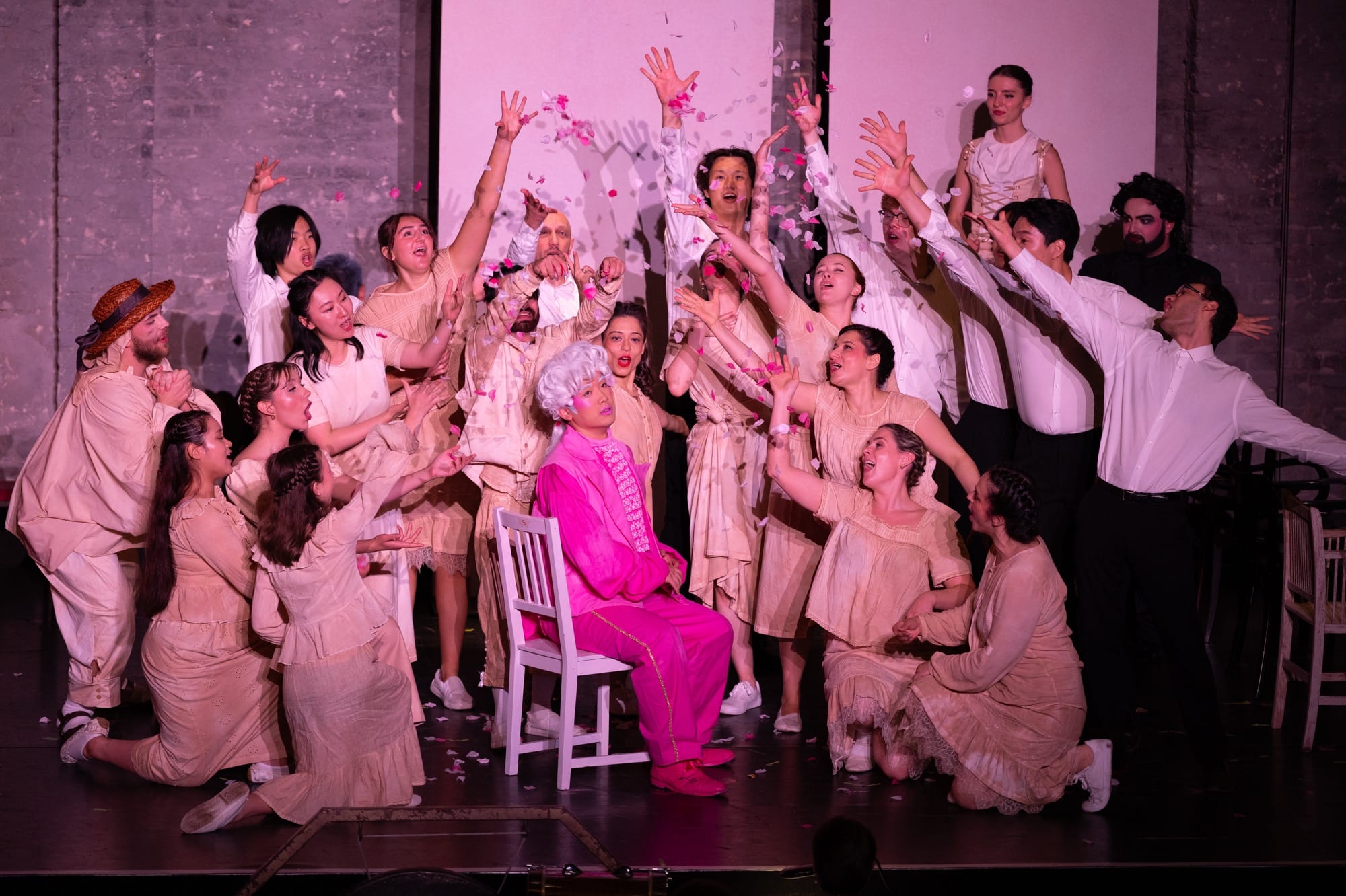
- Production: Le Nozze di Figaro, 2026
- Composer: Wolfgang Amadeus Mozart
- Librettist: Lorenzo Da Ponte
- Company: Berlin Opera Academy
- Venue: Delphi Theatre
- Country: Germany
- Start Date: July 2026
- End Date: August 2026
Creative Team
- Director: Ella Marchment
- Assistant Director: Niva Menon
- Assistant Director: Nils Reinvald
- Assistant Director: Maja Higgins
- Costume Designer: Yarden Deddi
- Costume Designer: Mira Turkewitz
- Lighting Designer: Rick Piersall
- Set Designer: Simone Serlanga
Production Team
- Administrative Assistant: Sarah Schmidt-Joncour
- Artistic Direction and Production Management: Astrid Schrader
- Artistic Direction and Production Management: Jessica Farrell
- Artistic Direction and Production Management: Mark Sampson
- Coach: Ben Woodward
- Coach: James Henshaw
- Coach: Jessica Cambio
- Coach: Luisella Germano
- Coach: Nobuko Amemiya
- Coach: Rick Piersall
- Coach: Stefania Dovhan
- Costume Assistant: Clare Pachuta
- Makeup: Elena Whiteley
- Movement Instructor: Annija-Dziesma Teteris
- Orchestra Management Assistant: Brooke Christiansen
- Production Assistant: Henrik Helling
- Prompter: Giuseppe Matteo Serrelli
- Stage Manager: Ana Moreno
- Stage Manager: Kit Scott
- Video and photography: Sara Reija
- Wardrobe assistant: Camille Lissajoux
- Wardrobe assistant: Elli Dillon
- Wardrobe assistant: Kori Martin
- Wardrobe assistant: Loris Venegas
- Wardrobe assistant: Malu Gomez
- Wardrobe assistant: Marina Wagner
- Wardrobe assistant: Nic Degelman
Musicians
- Conductor: Dominic Wheeler
- Assistant Conductor: Rodolfo Tagle
- Assistant Conductor: Slimane Mechehar
- Assistant Conductor: Noah Damm
- Répétiteur: Weixiang Wang
- Répétiteur: Valeria Affatato
- Répétiteur: Christopher Knox Oakey
- Chorus: Berlin Opera Academy Chorus
- Orchestra: Berlin Opera Academy Orchestra
Cast
- Performer: Ziyang Zeng
- Role: Figaro
- Performer: Nadya Gamayunova
- Role: Susanna
- Performer: Sooin We
- Role: Count
- Performer: Mengshi Li
- Role: Countess
- Performer: Nolan Smith
- Role: Bartolo
- Performer: Karolina Krejci
- Role: Marcellina
- Performer: Grace Coon
- Role: Cherubino
- Performer: Victoria Herraiz
- Role: Barbarina
- Performer: Samuel Lin
- Role: Antonio
- Performer: William Pratsetyo
- Role: Basilio
- Performer: James Graziano
- Role: Don Curzio
- Performer: Yana Riegel
- Role: Bridesmaid
- Performer: Evelyn Wijackanawong
- Role: Bridesmaid
Programme
Synopsis
Le Nozze di Figaro (The Marriage of Figaro) is a comic opera in four acts by Wolfgang Amadeus Mozart, set over the course of a single chaotic day in the castle of Count Almaviva, near Seville. The story centres on Figaro, the Count’s valet, and Susanna, the Countess’s maid, who are engaged to be married. Their happiness is threatened by the Count, who has become infatuated with Susanna and intends to revive the old feudal privilege of the ‘right of the first night’, giving him the chance to seduce her before her wedding.
Figaro quickly realizes the Count’s intentions and begins plotting to outwit him, while Susanna proves to be equally clever and resourceful, making her an equal partner in the schemes. At the same time, Countess Rosina Almaviva, heartbroken by her husband’s infidelity, agrees to help expose him and restore their marriage. The opera unfolds through a series of misunderstandings, disguises, hidden identities, and intercepted letters, creating a fast-moving web of comic confusion.
A key subplot involves the youthful page Cherubino, whose uncontrollable romantic feelings for multiple women in the household add further complications. His presence repeatedly disrupts plans and intensifies the Count’s jealousy.
As events escalate, Figaro, Susanna, and the Countess devise a plan to trick the Count during a nighttime encounter in the garden. Susanna disguises herself as the Countess, luring the Count into a staged romantic trap. Meanwhile, Figaro briefly misinterprets the situation, believing Susanna has been unfaithful, which creates a moment of emotional tension before the truth is revealed.
In the final resolution, the Count is exposed and publicly embarrassed, and the Countess confronts him with dignity. He ultimately begs for forgiveness, which she grants. The opera ends with reconciliations and restored relationships, highlighting themes of forgiveness, social inversion, and the triumph of intelligence and virtue over authority and privilege.
Video
Photos


All photos (C) Tom Hibbert